
 MyEnergy Engineering
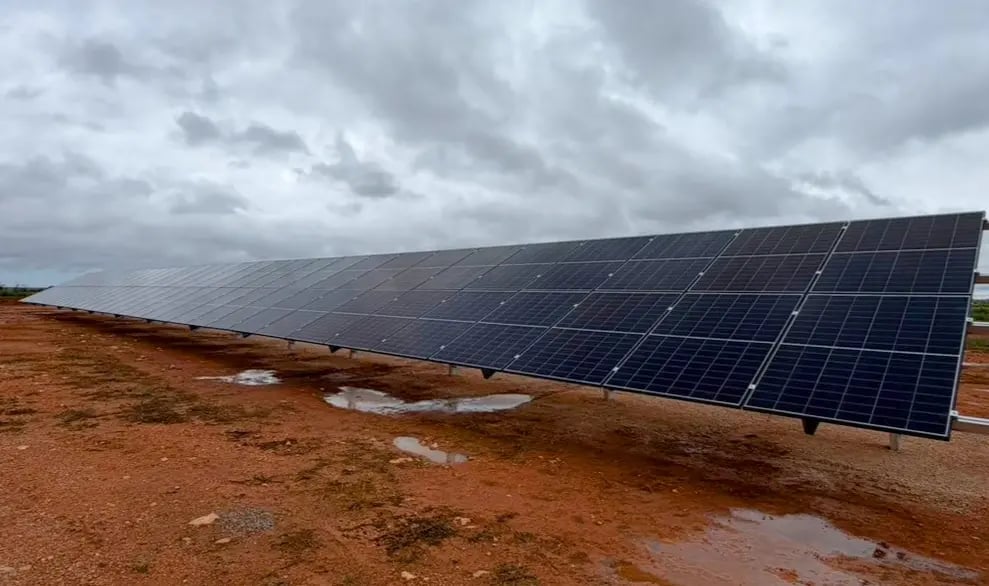
Located on the Nullarbor Plain in Western Australia, Forrest Resthouse is in one of Australia's most isolated settlements. Established alongside the Trans-Australian Railway, Forrest played an important role in the country's early aviation history, serving as a vital stopover for aircraft travelling between Perth and Adelaide. Built in the late 1920s by West Australian Airways, the resthouse provided accommodation for passengers and staff making the long journey across the continent.
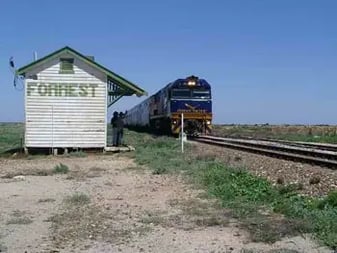 Today, the remote settlement is surrounded by hundreds of kilometres of open Nullarbor landscape, with little more than a small collection of buildings, an old railway line and an airstrip. With no connection to the grid and limited access to services, reliable remote area power is essential to keeping this historic property operational.
Reliable Power in the Middle of the Nullarbor
Now owned by the Australian Rail Track Corporation (ARTC), Forrest Resthouse operates as an eight-bedroom resthouse in one of Australia's most isolated locations. With two large kitchens and split-system air conditioning throughout, the property has substantial electricity demands, particularly when accommodation and kitchen facilities are operating simultaneously.
With no access to the grid, Forrest Resthouse has traditionally relied heavily on diesel generators, bringing ongoing fuel costs, maintenance and logistical challenges in such an isolated location. A reliable remote area power system was needed to reduce generator runtime while providing sufficient power for the property's accommodation, kitchens and air conditioning throughout daily operations.
A Remote Area Power System Built for Forrest Resthouse.
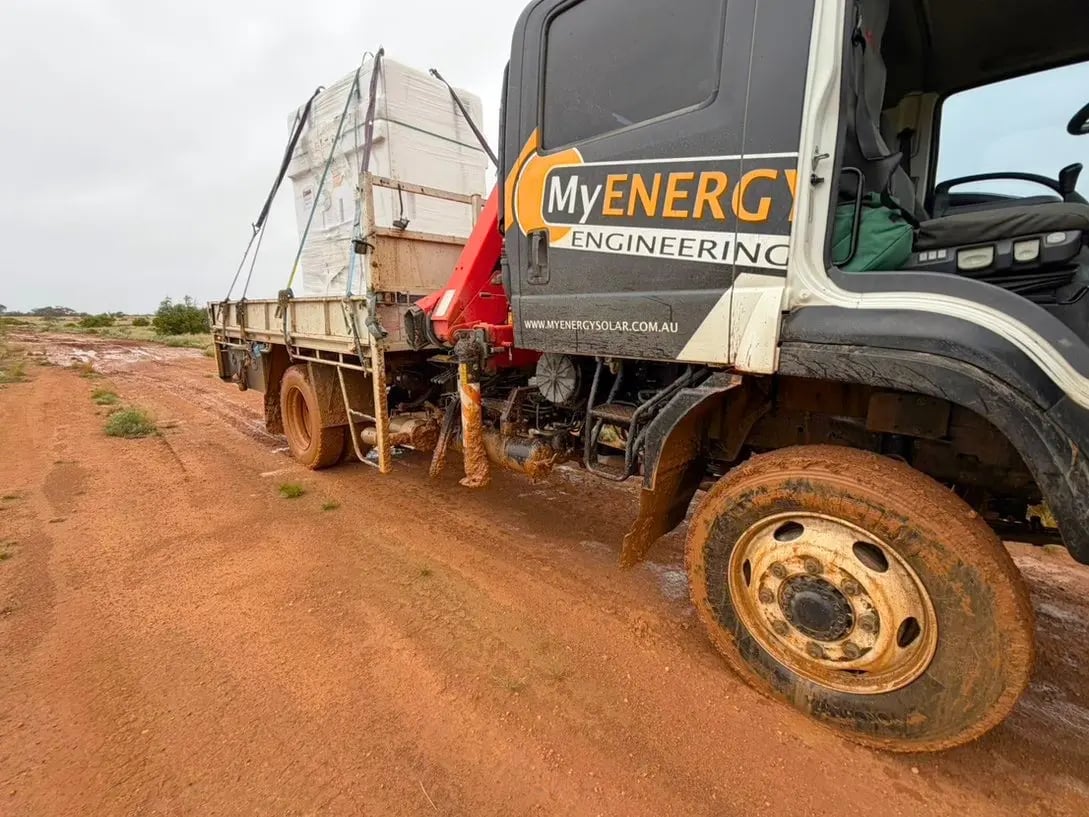
With Forrest located deep in the Western Australian outback, careful planning and logistics were essential to delivering the project. MyEnergy's installation team, truck, specialist machinery and equipment made the long journey across the remote Nullarbor Plain to reach the site.
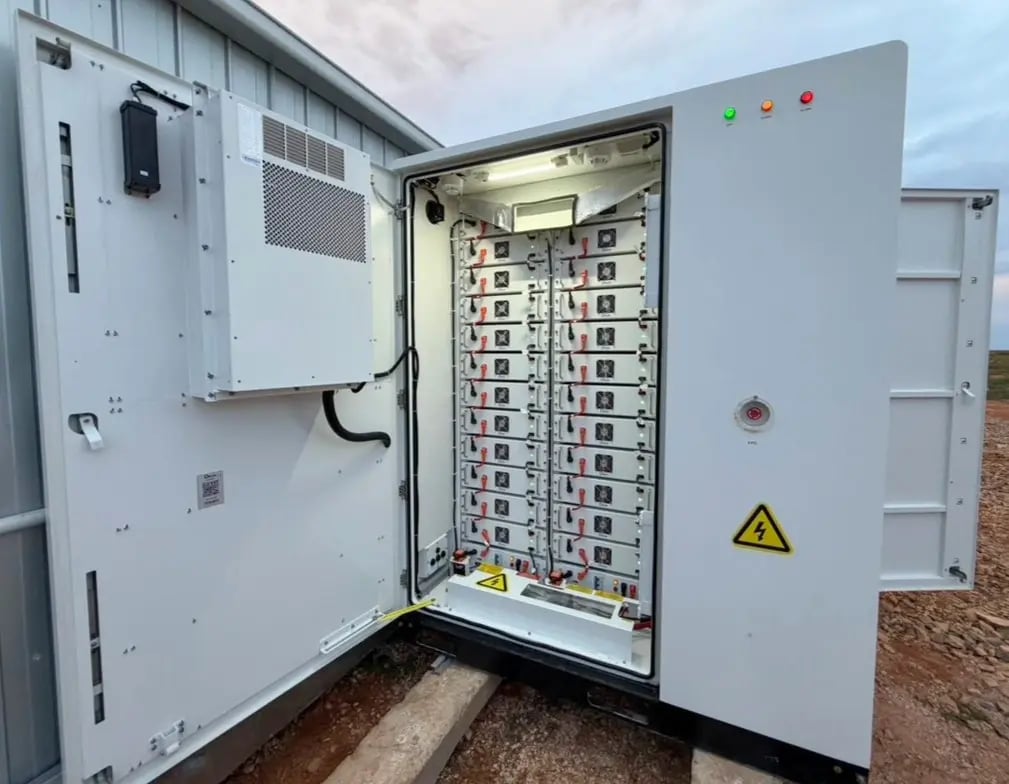
MyEnergy designed and built a complete remote area power system tailored to the needs of Forrest Resthouse, combining 42.75kW of JA Solar panels, a 120kWh Deye High Voltage C&I Battery Cabinet and a 50kW Deye High Voltage Three Phase Hybrid Inverter. The solar array was installed using our in-house ground mounting capabilities, including our GAYK pile driving machine. Together, the Deye inverter and battery provide the power capacity and storage needed to meet the property's varying electricity demands, with generator integration providing additional backup while reducing reliance on diesel.
Remote Outback Challenges
Delivering a complete power system to one of Australia's most isolated locations came with some challenges. Heavy rainfall flooded access roads, leaving our team stranded on site and forcing them to catch the service train home. During a break between rain events, the team flew back in by light aircraft to retrieve the MyEnergy truck, tools and machinery. Despite these challenges, MyEnergy's in-house team managed every stage of the project, from remote logistics and pile driving through to ground mount construction, solar installation, battery and inverter installation and final commissioning. With limited services and resources available on site, having one team responsible for the entire project helped minimise logistical complications and avoid coordinating multiple contractors in such an isolated location. The result is a complete remote area power system, designed, built and installed by MyEnergy for the demanding conditions of the Nullarbor.
Remote Area Power System Overview:
Solar: 42.75kW JA Solar Panels
Inverter: 50kW Deye High Voltage Three Phase Hybrid Inverter
Battery: 120kWh Deye High Voltage C&I Battery Cabinet
Mounting System: S-Rack Ground Mount System
Powering a Piece of Australian History
Nearly a century after welcoming travellers crossing the Nullarbor by air and train, Forrest Resthouse continues to represent an important chapter in Australia's remote transport history.
With a reliable remote area power system now in place, the property is better equipped to meet its electricity demands while reducing reliance on diesel generators. Combining substantial solar generation with Deye commercial and industrial battery storage and hybrid inverter technology, the system provides reliable power, substantial energy storage and the capacity to support the property's varied operations, with generator backup when required.
This project demonstrates the value of purpose-built remote area power systems in keeping historic properties and remote businesses operating reliably, even in Australia's most isolated locations.
Discover MyEnergy's award-winning remote area power systems, designed, built and installed for Australia's most challenging locations, here;
← Back to all projects