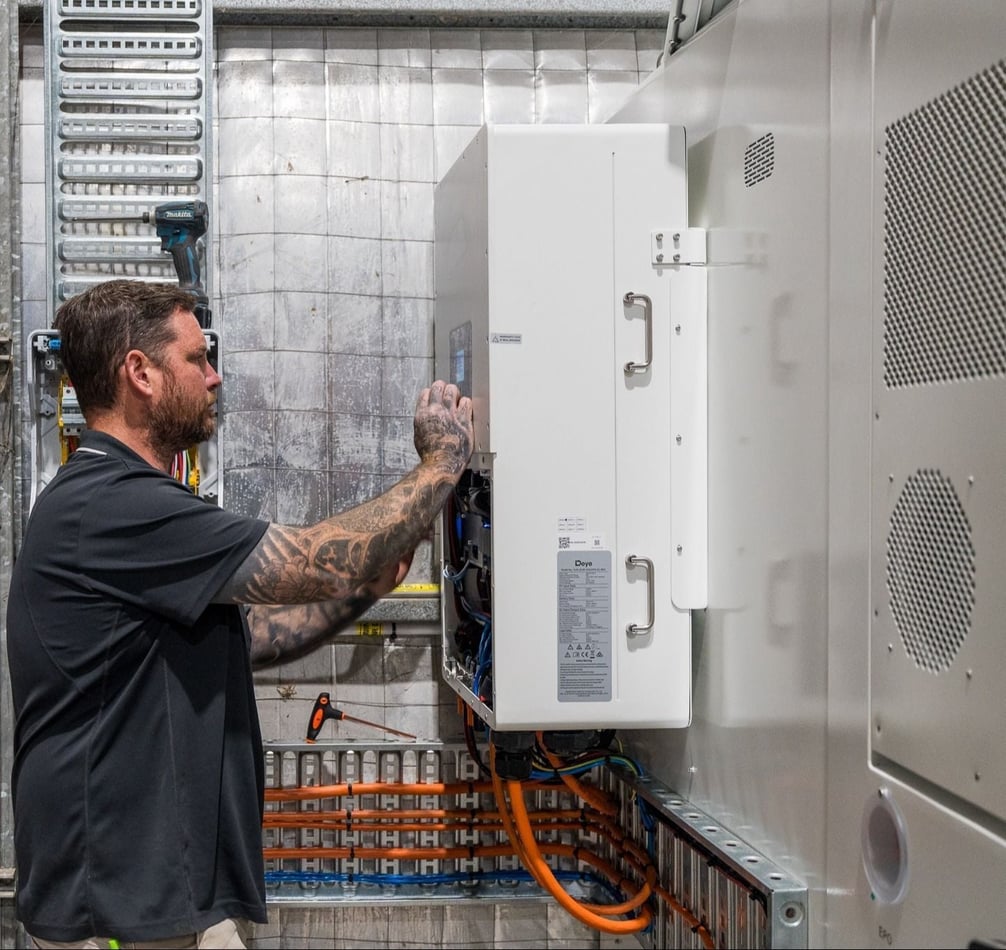
Off-Grid Battery Replacement

Upgrade from Lead Acid to Lithium Battery Systems

If your off-grid system is still running on lead acid batteries, there’s a good chance it’s no longer performing the way it should. Capacity drops off over time, generator run time increases, and reliability becomes a real concern—especially when you need power the most.

At MyEnergy Engineering, we focus on replacing ageing lead acid battery banks with lithium systems that deliver consistent, dependable performance and a far longer service life.


Why Replace Lead Acid Batteries?

Lead acid batteries naturally degrade over time. Even if they’re still technically operating, they often can’t hold enough charge to get you through the night or periods of poor weather. What used to be a reliable system starts to fall short.

In many cases, we see systems where the batteries are the weakest point—forcing the generator to run more often, increasing fuel costs, and putting unnecessary strain on the rest of the setup. Once this starts happening, replacement becomes less about upgrading and more about restoring reliability.

The Shift to Lithium

Switching to lithium changes how your system performs day to day. Instead of dealing with voltage drop under load and limited usable capacity, you get a battery that holds its voltage and delivers consistent output right through its cycle.

Lithium systems also allow for significantly deeper discharge, meaning you’re actually using the energy you’ve stored rather than leaving capacity locked away to protect the battery. The result is a system that feels stronger, more stable, and far more predictable.

Another key difference is lifespan. Where lead acid systems often require replacement every few years, a well-designed lithium system is built for the long term. This reduces ongoing costs and removes the uncertainty around when the next failure might occur.

Built for Reliability

Battery replacement isn’t just about swapping one technology for another. It’s about making sure the entire system works properly together.

We assess how your current setup is operating, including solar input, inverter performance, and generator integration. From there, we design the replacement so the system runs as a complete solution—not just a new battery bolted onto an old setup.

This is where reliability comes from. Not just better equipment, but a system that’s been properly thought through.


Designed to Scale

A common issue with older systems is that they were built for a specific point in time. As loads increase—whether it’s additional appliances, new buildings, or expanded operations—the system starts to struggle.

When we replace batteries, we look at where things are heading, not just where they are now. Lithium systems can be configured to allow for future expansion, whether that’s increasing storage capacity, adding more solar, or upgrading inverter capability later on.

This approach avoids having to redo the system again in a few years.

Working with Existing Systems

In many cases, we can integrate lithium batteries into your existing off-grid setup, particularly with Victron-based systems or compatible hybrid inverters. Where required, we’ll recommend upgrades to ensure everything operates correctly and safely.

The goal is to keep what’s working, improve what isn’t, and deliver a system that performs properly as a whole.


Warranties and Long-Term Confidence

Modern lithium batteries come with strong manufacturer warranties, typically in the range of 7 to 10 years, often backed by performance metrics such as cycle life or energy throughput.

More importantly, the system itself is designed and installed to last. With an in-house team and a long track record in off-grid projects, we’re focused on delivering setups that hold up over time—not just on paper, but in real-world conditions.


A Practical Upgrade Approach

Every battery replacement starts with understanding how the system is currently being used. Daily consumption, seasonal variation, generator use, and solar production all play a role in determining the right solution.

From there, we provide a clear upgrade path that improves performance without overcomplicating things. In some cases, it’s a straightforward battery swap. In others, it makes sense to address inverter capacity or solar input at the same time to get the most out of the upgrade.


Get Your System Assessed

If your off-grid system isn’t holding up like it used to, it’s worth reviewing the battery setup before it becomes a failure point.

We can assess your current system and provide clear recommendations on replacement options, expected performance improvements, and how to set the system up properly for the next stage.