
 MyEnergy Engineering
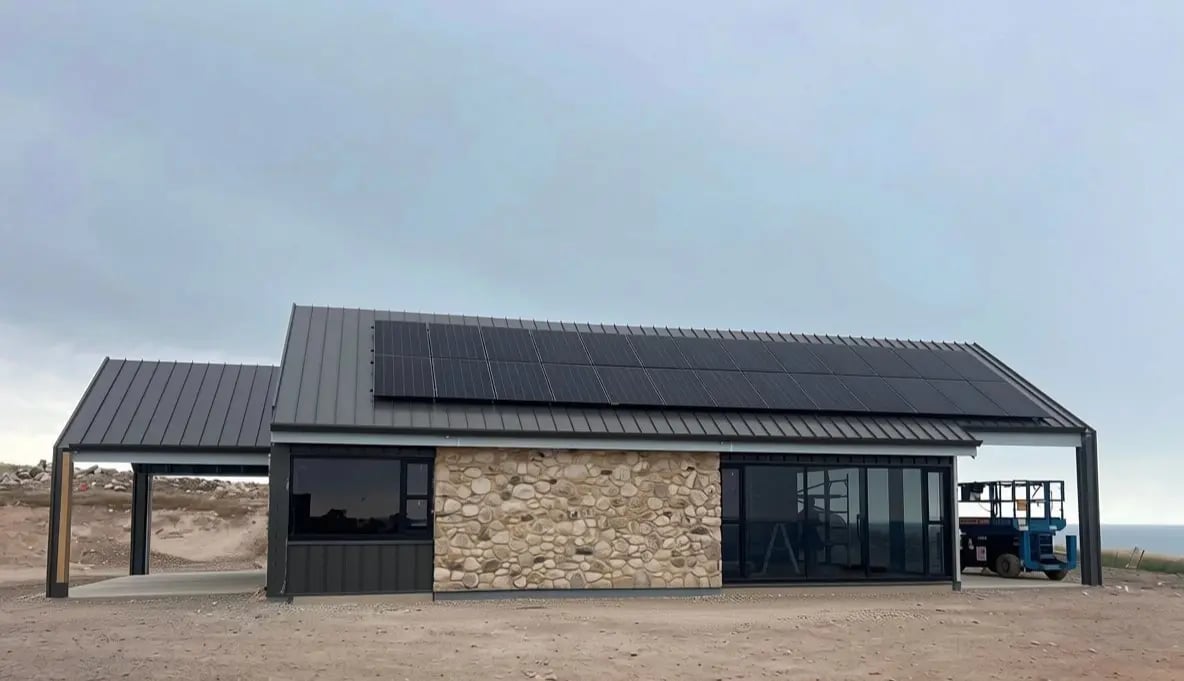
When the owner began planning a new art studio in Carrickalinga, they wanted to avoid the cost of bringing grid power to the site. Space mattered, too. The studio looks out over the coast on South Australia’s Fleurieu Peninsula, and there was little room to tuck power equipment out of sight.
Designing off-grid solar for an art studio meant looking beyond the lights and power points. The owner also planned to use two air conditioners and cooking appliances. We used the building plans to work out where the equipment would fit.
Project at a glance
The brief
Give the studio its own power supply and keep the batteries and inverter outside the workspace.
The system
12.87 kW of AIKO rooftop solar · 25.6 kWh of ZYC battery storage · 10 kVA Victron MultiPlus-II inverter/charger
Installation
Roof-mounted panels on Schletter framing, with the batteries and inverter in an aluminium cabinet beside the studio.
Sizing the system for a working studio
The builder asked a practical question. Could the owner use the cooktop while both air conditioners were running? We checked how much power all three appliances could draw at once when sizing the 10 kVA inverter. We also considered how long they would run over a working day to size the solar array and battery bank.
Equipment built for a coastal site
With the ocean so close, we chose rooftop equipment that could handle the salty air. The studio’s 26 AIKO Neostar 3P panels are rated at 495 W each and tested for salt-mist resistance. We mounted them on Schletter aluminium framing, a corrosion-resistant choice for this exposed roof.
Beside the studio, a Wescor AL8 aluminium cabinet houses the batteries and inverter. Its powder-coated aluminium body suits the coastal conditions and keeps the power equipment outside, leaving more room for the owner to work.
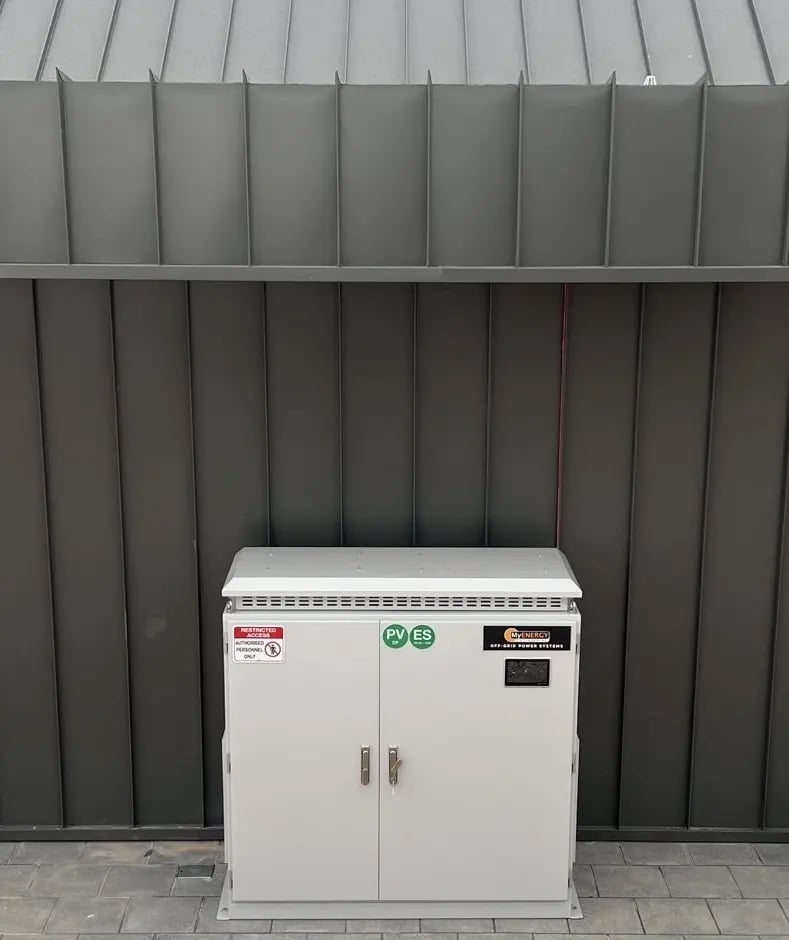
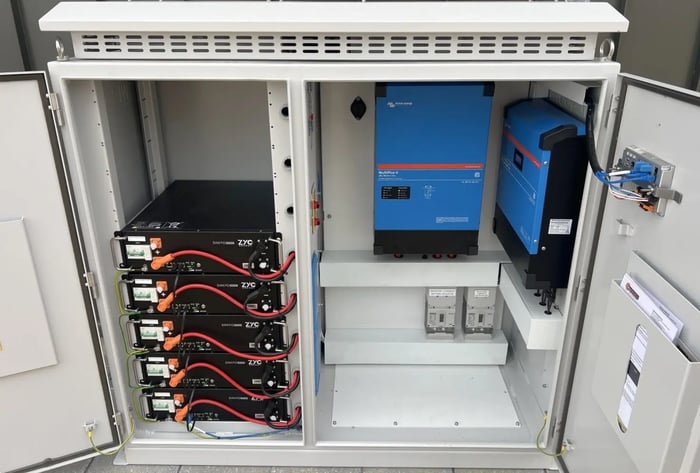
Our electricians fitted out the power cabinet in our workshop before taking it to Carrickalinga. Open the two front doors and the five ZYC batteries are on one side, with the inverter and charge controller alongside. Our team can service the system from outside the studio.
Power after the sun goes down
As the light fades, the Victron MultiPlus-II draws on the 25.6 kWh battery bank to keep the studio’s lights and power points running. When the panels are producing more power than the studio is using, the Victron SmartSolar charge controller directs the surplus into the batteries.
The owner can check how the system is running on the Victron Ekrano GX display. On a cloudy afternoon, a glance shows how much power the panels are producing, what the studio is drawing and how much charge is left for the evening.
The finished studio runs independently of the grid, with the power equipment tucked against the outside wall. If you’re planning a similar build, our off-grid design process explains what we look for in the plans.
← Back to all projects