
 Ciaram Granger
Off-grid home power is not just solar panels and batteries bolted to a wall. For a house with no grid connection in Australia, the system needs to handle real loads, poor weather, high-starting equipment, seasonal variation and future growth. Get any one of those wrong and the site goes dark when it matters most.
This guide covers the full design process for a standalone home power system. From load assessment and battery autonomy through to inverter sizing, generator integration and long-term support, every major decision point is addressed. MyEnergy Engineering has been designing and installing off-grid home power systems for remote Australian properties since 2010, and the approach here reflects what actually works in the field.
If you are building a new home without a grid connection, upgrading an existing system, or planning a property where grid extension costs are prohibitive, this is the information you need before making design decisions.
Key Takeaways: Off-Grid Home Power System Design Australia
- A proper off-grid system must be designed around your actual daily loads, battery autonomy needs and backup requirements.
- Battery storage sizing depends on your location, weather patterns and how many days of autonomy you need without sun.
- Inverter capacity must account for peak demand and high-starting loads like pumps, motors and air conditioning.
- MyEnergy Engineering designs each system around how the site actually operates, not around ideal-condition specifications.
- Generator backup and long-term support planning are critical for reliable off-grid living in remote Australia.
What Is an Off-Grid Home Power System?
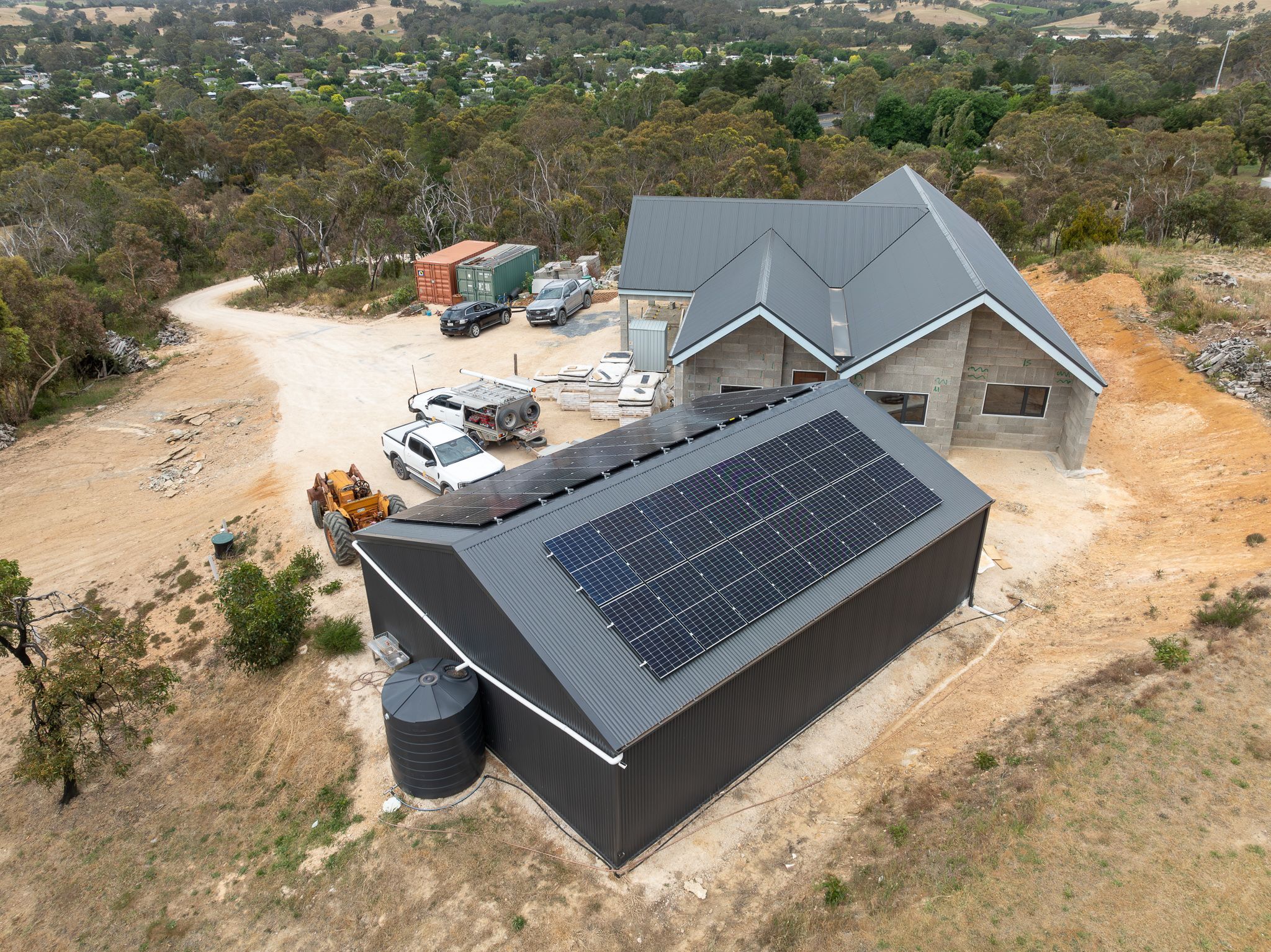
An off-grid home power system generates, stores and manages all the electricity a household needs without any connection to the mains grid. The system operates independently, typically combining solar PV generation with battery storage and a backup generator.
Unlike a grid-connected setup where shortfalls are covered by the utility network, an off-grid system must be self-sufficient. Every watt of power consumed by the home must come from the system itself. This means system design is critical. An undersized system will leave you without power when conditions are difficult.
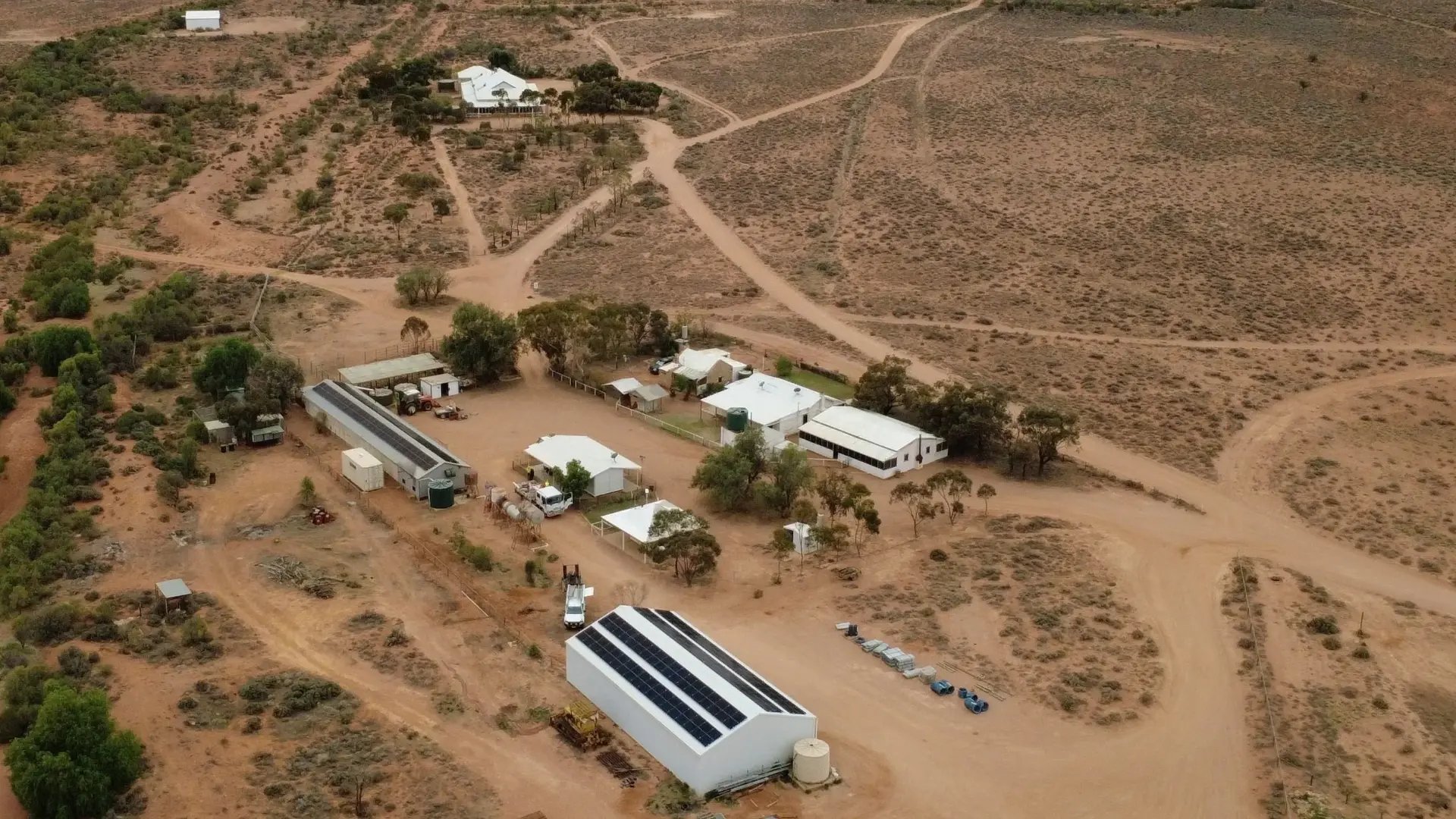
Off-grid systems in Australia are most common in rural and remote areas where the cost of grid extension exceeds the cost of a standalone power system. Properties 500 metres or more from existing infrastructure often find that off-grid is the more practical and cost-effective path.
Why System Design Matters More Than Component Selection
Many homeowners focus on individual components. They research solar panels, compare battery brands and look at inverter specifications in isolation. The reality is that system design determines whether the power system will actually perform.
A well-designed system considers how all components interact under real operating conditions. The solar array needs to charge the battery bank adequately during winter months. The inverter needs to handle simultaneous peak loads. The generator needs to integrate with the charging system and start automatically when required.
Poor design shows up as repeated generator running, batteries not reaching full charge, inverter overloads during peak demand, or systems that cannot support additional loads as the household grows. These are design failures, not equipment failures.
How to Assess Your Daily Energy Requirements
Calculating Your Daily Load Profile
The starting point for any off-grid system is understanding how much energy the home will actually consume each day. This is measured in kilowatt-hours (kWh) and should account for every appliance, light fitting, pump, heater and piece of equipment on the property.
For an existing property, an energy logger installed on the main switchboard will capture the real load profile over days or weeks. This data shows not just total consumption but when peak demand occurs and how loads vary throughout the day.
For a new build, you need to list every appliance and estimate its daily run time. A 3-bedroom home in southern Australia typically consumes between 15 and 30 kWh per day depending on heating method, hot water system and whether high-draw appliances like air conditioning are used regularly.
Identifying Peak Power Demand
Total daily energy is only half the picture. You also need to know the maximum instantaneous power demand. This is measured in kilowatts (kW) and represents the highest load the system must support at any given moment.
Peak demand determines inverter sizing. If multiple high-draw appliances run simultaneously, such as a bore pump starting while the oven is on and the air conditioning is running, the inverter must handle that combined load without tripping.
Accounting for High-Starting Loads
Motors, pumps and compressors draw significantly more power at startup than during normal operation. A bore pump rated at 2 kW might draw 8 to 10 kW for the first few seconds as it gets up to speed. Pump loads and refrigeration compressors require careful consideration during system design.
Failing to account for these startup surges is one of the most common reasons off-grid systems trip out or appear unreliable. The inverter must have sufficient surge capacity, or soft-start devices need to be installed on the offending equipment.
How to Size Your Solar Array for Off-Grid
Matching Generation to Consumption and Location
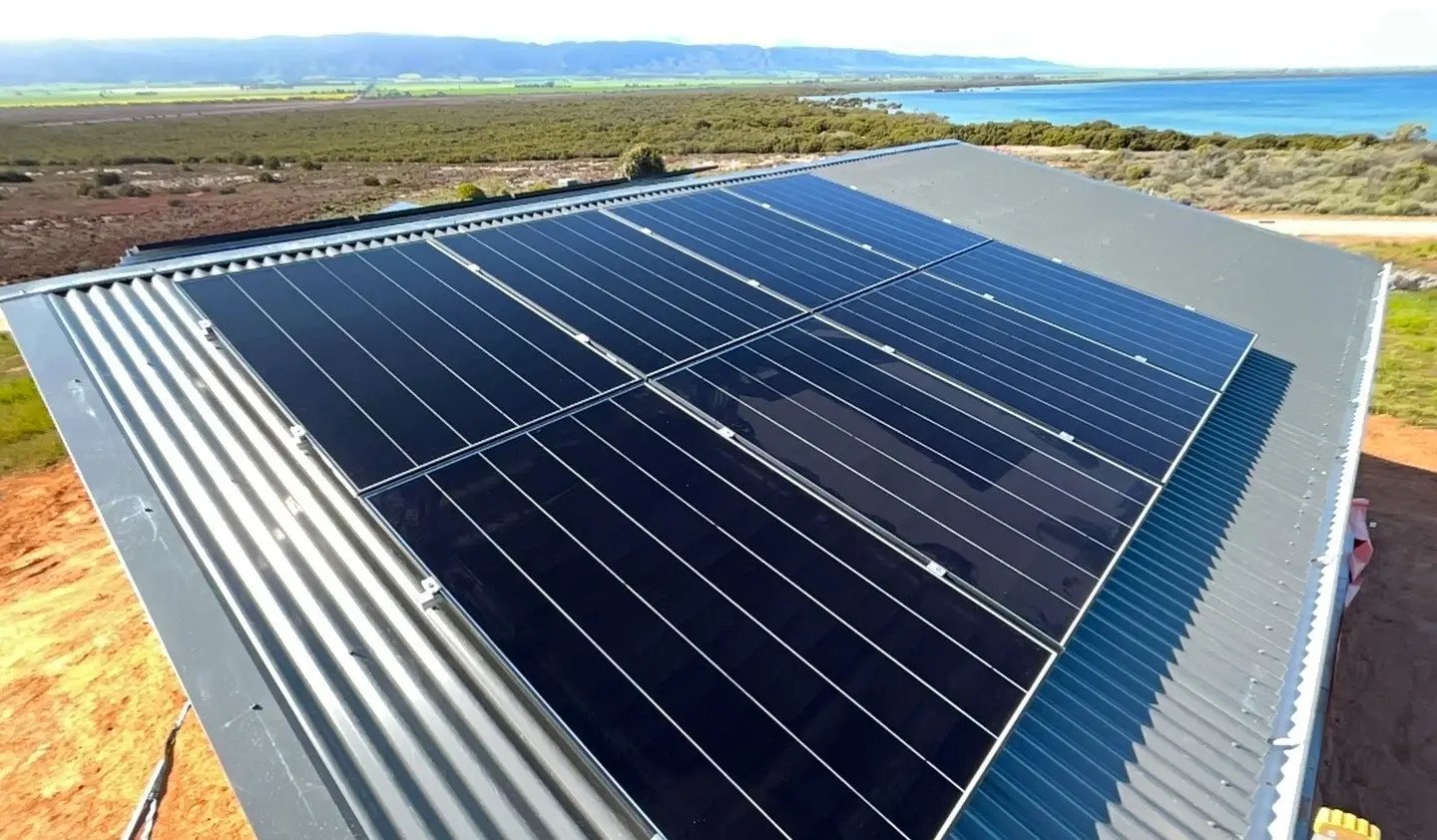
Solar array sizing for off-grid is fundamentally different from grid-connected systems. A grid-connected system exports excess power and draws from the grid when needed. An off-grid array must generate enough energy to fully charge the battery bank and run daytime loads, even during the worst month of the year.
In southern Australia, winter solar production can be 30 to 40 percent of summer output. The array must be sized for this low point if you want to minimise generator use. This often means installing significantly more solar capacity than a grid-connected home would need for the same consumption.
Panel Orientation and Mounting Considerations
For off-grid homes, north-facing panels at a tilt angle optimised for winter production typically perform better than a flat summer-optimised angle. A steeper tilt (around 30 to 40 degrees in southern states) captures more winter sun when generation matters most.
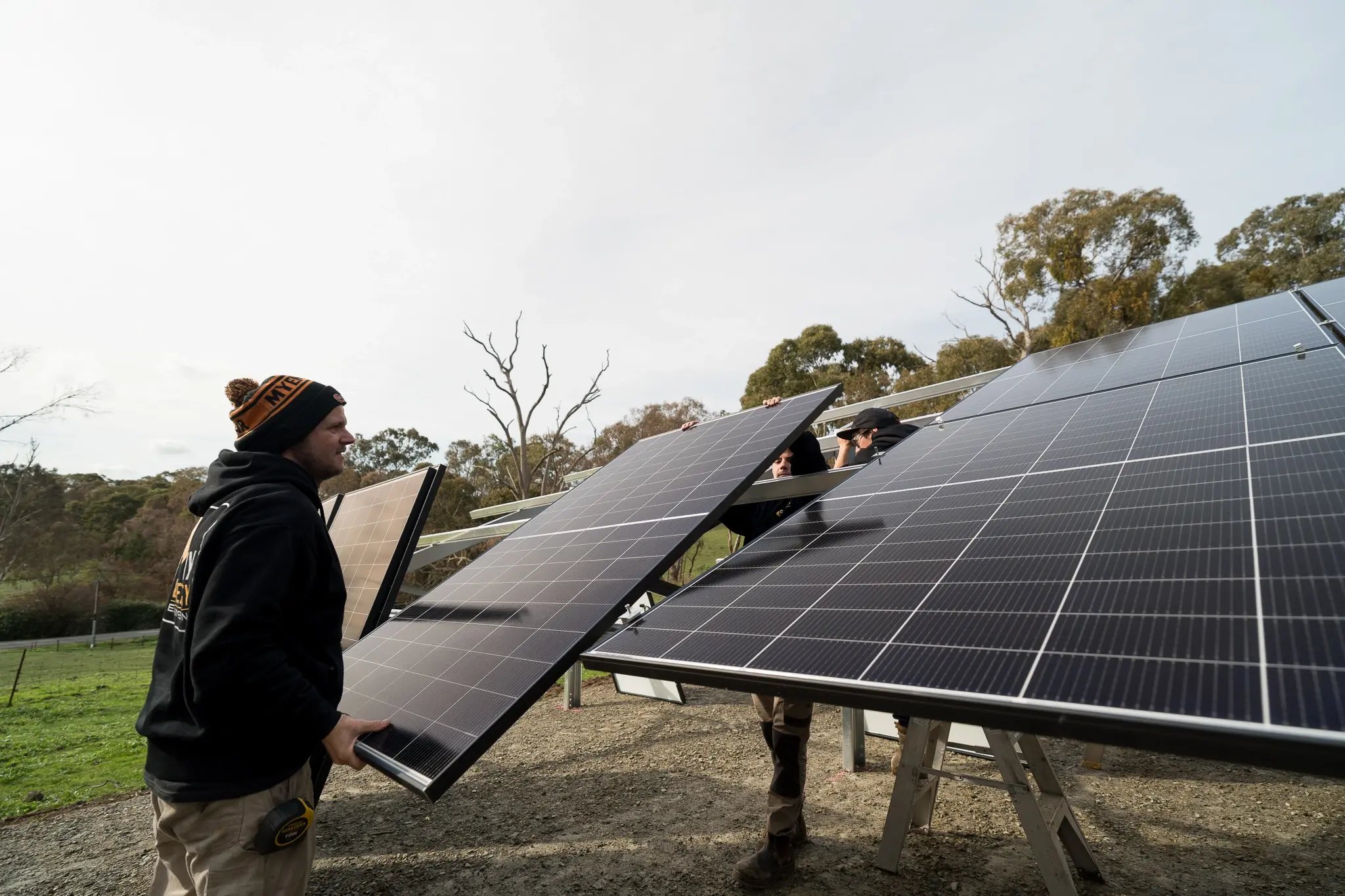
Ground-mounted arrays give you full control over orientation and tilt, and are easier to clean and maintain in remote locations. Roof-mounted systems work where roof orientation is suitable, but remote properties often have the space for a dedicated ground mount that can be positioned for optimal performance.
How to Size Battery Storage for an Off-Grid Home
Understanding Battery Autonomy
Battery autonomy refers to how many days the system can operate on stored energy alone, without any solar input. For most off-grid homes in Australia, two to three days of autonomy is the baseline recommendation. Properties in regions with extended cloudy periods or limited winter sun may require more.
If you consume 20 kWh per day and want three days of autonomy, you need approximately 60 kWh of usable battery capacity. Factor in depth of discharge limits (typically 80 to 90 percent for lithium) and system losses, and the installed capacity needs to be higher.
Lithium vs Lead-Acid for Off-Grid Homes
Lithium battery systems have become the standard for new off-grid installations. They offer deeper discharge, longer cycle life, faster charging and lower maintenance compared to lead-acid. Over the life of the system, lithium typically delivers a lower cost per cycle despite the higher upfront investment.
Lead-acid batteries are still used in some applications, particularly where upfront cost is the primary concern. They require more careful management, regular maintenance and a larger physical footprint for the same usable capacity. Battery replacement cycles are shorter with lead-acid, typically 5 to 8 years compared to 10 to 15 years for lithium.
How MyEnergy Engineering Sizes Battery Systems
MyEnergy Engineering sizes every battery system around the site's actual operating conditions. This includes daily consumption, peak loads, seasonal variation, generator backup availability and the homeowner's tolerance for generator running during extended poor weather.
A system designed for a property in central Australia with abundant sun year-round will have different battery requirements than one in Tasmania where winter solar production drops significantly. The design accounts for location-specific weather data to ensure the battery bank is neither undersized nor unnecessarily oversized.
How to Choose the Right Inverter for Off-Grid
Inverter Capacity and Surge Rating
The off-grid inverter is the heart of the system. It converts DC power from the batteries to AC power for household use, and it must handle the full range of loads the home will draw. Inverter sizing starts with peak demand and adds a margin for surge loads.
A typical off-grid home needs an inverter rated between 5 kW and 10 kW continuous output, with surge capacity of two to three times that for motor starting. Properties with large workshop equipment, multiple pumps or commercial-grade appliances may need higher capacity or parallel inverter configurations.
AC-Coupled vs DC-Coupled Systems
Off-grid systems can be configured as DC-coupled (solar charges batteries via a charge controller) or AC-coupled (solar feeds through a grid-type inverter and is managed by the main off-grid inverter). Each approach has trade-offs in terms of efficiency, flexibility and cost. MyEnergy Engineering has published a detailed breakdown of AC vs DC coupling for off-grid applications.
DC coupling is often more efficient for smaller systems, while AC coupling allows larger solar arrays and can use standard grid-type inverters. The choice depends on system size, available equipment and future expansion plans.
Victron Energy Inverters in Off-Grid Applications
MyEnergy Engineering is a long-standing Victron Energy distributor and service agent. Victron inverter/chargers are well-suited to off-grid residential applications because of their high surge capacity, programmable generator integration and remote monitoring capabilities through the VRM portal.
The ability to monitor and manage the system remotely is particularly valuable for off-grid homes in isolated areas. Faults can be identified early, settings adjusted and performance tracked without a site visit.
Why Generator Backup Is Part of Good System Design
The Role of a Generator in an Off-Grid System
A backup generator is not a sign of a poorly designed system. It is a deliberate design decision that provides insurance against extended poor weather, unexpected load increases or component downtime. Even well-designed solar and battery systems benefit from a generator that can charge the batteries and run heavy loads when conditions demand it.
Without a generator, the system must be oversized to cover worst-case scenarios. This adds significant cost to both the solar array and battery bank. A properly integrated generator allows the core system to be right-sized for typical conditions while still maintaining reliability during unusual events.
Generator Integration and Automatic Start
Modern off-grid systems integrate the generator automatically. When battery state of charge drops below a set threshold, the generator starts, charges the batteries and powers heavy loads directly. When charge targets are reached, it shuts down.
This automatic operation means the system manages itself without constant owner intervention. MyEnergy Engineering configures generator auto-start parameters based on each site's specific operating conditions, including quiet hours to prevent overnight starts and load-priority settings.
Site Assessment and Installation Considerations
What a Proper Site Assessment Covers
Before any system is designed, the site needs a thorough assessment. This includes the physical location of the solar array, battery enclosure and generator. It also considers cable runs (which affect voltage drop), access for future maintenance and protection from weather and environmental hazards.
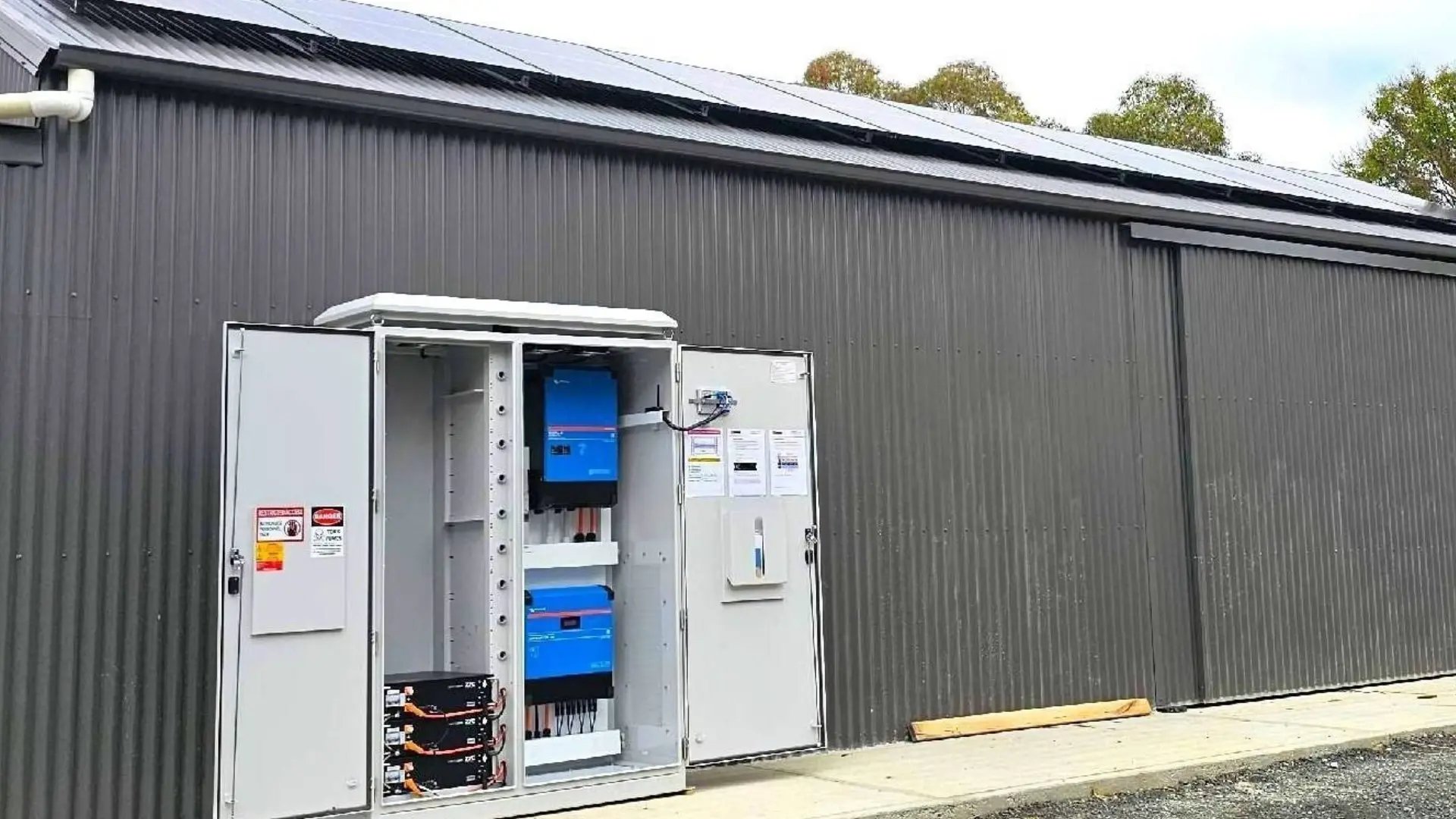
Ground conditions matter for mounting structures, particularly in rocky or sandy terrain where standard footings may not be suitable. MyEnergy Engineering has experience with containerised power systems that arrive pre-built and tested, reducing on-site installation time and improving quality control for remote properties.
Electrical Compliance and Safety
Off-grid power systems in Australia must comply with relevant Australian Standards, including AS/NZS 4509 for standalone power systems and AS/NZS 5033 for solar installations. A licensed electrician with off-grid experience should handle the installation and commissioning.
Compliance is not just a regulatory requirement. It ensures the system is safe, insurable and built to perform over its full service life. Shortcuts in installation quality inevitably lead to reliability problems and higher long-term costs.
How to Plan for Future Expansion
A well-designed off-grid system should accommodate growth. Additional bedrooms, a new shed, a workshop, an electric vehicle charger or a change in heating system can all increase demand beyond the original design.
Planning for expansion means selecting an inverter platform that supports parallel operation, leaving space in the battery enclosure for additional modules, and sizing cable infrastructure for future loads. Understanding your future requirements at the design stage costs little but saves significant expense later.
MyEnergy Engineering designs systems with expansion in mind. Using modular inverter platforms and scalable battery configurations, the system can grow with the property without requiring a full redesign.
Long-Term Support and System Maintenance
Off-grid systems are long-term infrastructure, not one-off installations. They require ongoing monitoring, periodic maintenance and occasional component replacement over a 20 to 30 year lifespan.
Remote monitoring through platforms like Victron's VRM allows system performance to be tracked continuously. Faults, charging issues or unusual consumption patterns can be identified and addressed before they become serious problems.
MyEnergy Engineering backs every installation with long-term support. This includes remote monitoring, fault finding, system optimisation and assistance with future upgrades as requirements change. Having an ongoing relationship with the company that designed and installed the system means issues are resolved by people who understand the site.
What Off-Grid Home Power Costs in Australia
Off-grid system costs vary significantly based on daily consumption, required battery autonomy, site access and system complexity. A typical standalone power system for a 3 to 4 bedroom home ranges from the mid-twenties to the high forties in thousands of dollars.
The largest cost component is typically the battery bank, followed by the solar array and inverter system. Generator, mounting, cabling, enclosures and installation labour make up the remainder.
Grid extension costs should be compared against the off-grid system cost. In many rural areas, grid connection quotes of $50,000 to $150,000 or more make a standalone system the clear practical choice, with the added benefit of complete energy independence.
In Conclusion: How to Build a Reliable Off-Grid Home
Reliable off-grid power starts with proper design. The system must be sized around how the home actually operates, with adequate battery autonomy, sufficient inverter capacity, appropriate solar generation and a backup strategy for extended poor weather.
Every site is different. Loads, weather, access, generator backup, battery storage and future expansion all need to be considered before the system is built. That is why MyEnergy Engineering starts every project with a detailed assessment of the property and its requirements.
Built for remote sites. Backed by real experience. Power where the grid can't go.
FAQs About Off-Grid Home Power System Design Australia
How much battery storage does an off-grid home need?
Most off-grid homes need two to three days of autonomy, which translates to 40 to 80 kWh of installed battery capacity depending on daily consumption. MyEnergy Engineering sizes your battery bank around actual usage patterns and your local weather conditions to ensure reliable year-round power.
Can I run air conditioning on an off-grid system?
Yes, air conditioning can run on a properly sized off-grid system. The inverter must handle the startup surge and the battery bank must support the ongoing load. Inverter-type split systems are preferred because they draw less power and have lower starting currents than older models.
What happens during extended cloudy weather?
A properly designed system uses a combination of battery autonomy and generator backup to maintain supply during poor weather periods. MyEnergy Engineering configures automatic generator start so the system manages itself without manual intervention, keeping your home powered regardless of conditions.
How long does an off-grid battery system last?
Lithium battery systems typically last 10 to 15 years depending on usage and cycling depth. The solar array and inverter can last 20 to 25 years with proper maintenance. MyEnergy Engineering supports system performance over its full lifespan through monitoring, maintenance and planned component replacement.
Do I need a generator if I have enough batteries?
A generator is recommended for most off-grid homes as insurance against worst-case weather scenarios and unexpected load increases. Oversizing the battery bank to eliminate the generator entirely adds significant cost compared to including a well-integrated backup generator that only runs when needed.
What is the difference between off-grid and hybrid solar systems?
An off-grid system operates completely independently with no grid connection. A hybrid system connects to the grid but includes battery storage for backup or self-consumption. MyEnergy Engineering designs both system types depending on site requirements and grid availability.
← Back to all articles