
 MyEnergy Engineering
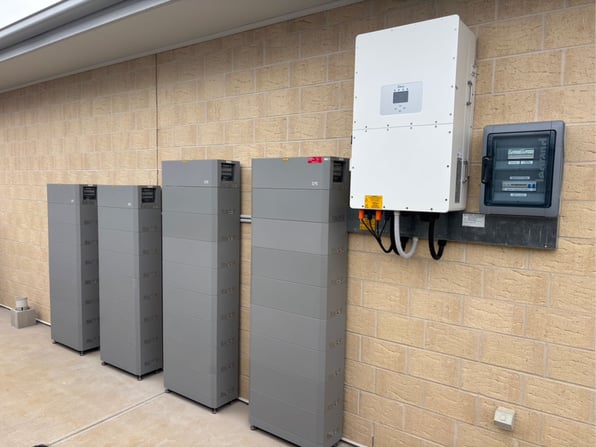
If you're adding a battery to a grid-connected solar system, one of the key design considerations is where the battery will be installed.
Battery placement isn’t just about convenience. In Australia, installations must follow strict electrical and safety standards that define where batteries can and cannot be located within a home.
Below is a practical overview of the requirements and considerations that apply to residential solar battery installations.
Australian Standards for Solar Battery Installations
All residential battery installations in Australia must comply with AS/NZS 5139:2019, which covers battery energy storage system safety.
Installers also need to follow several related electrical standards including:
|
Standard |
Description |
|---|---|
|
AS/NZS 3000 |
Wiring Rules |
|
AS/NZS 5033 |
Installation and safety requirements for PV arrays |
|
AS/NZS 4777.1 |
Installation requirements for grid-connected energy systems |
|
AS/NZS 4777.2 |
Inverter requirements |
|
AS/NZS 4509.1 |
Stand-alone power system safety |
|
AS/NZS 4509.2 |
Stand-alone power system design |
|
AS/NZS 3010 |
Generator installations |
These standards exist to ensure battery systems are installed safely and correctly within residential properties.
Indoor vs Outdoor Battery Installation
Most modern solar batteries are designed to be installed either indoors or outdoors, provided they meet the environmental requirements specified by the manufacturer.
Factors that can influence installation location include:
- Climate conditions
- Sun exposure
- Rainfall and humidity
- Dust and environmental exposure
Because of these variables, the final installation location is typically assessed during the system design stage.
Understanding IP Ratings
Battery systems are given an IP (Ingress Protection) rating, which indicates how well the unit is protected against dust and water.
The rating includes two numbers:
- First digit – protection against dust and solid objects
- Second digit – protection against water
For example:
|
Rating |
Meaning |
|---|---|
|
IP55 |
Protected from dust and low-pressure water jets |
|
IP56 |
Protected from stronger water jets |
|
IP65 |
Fully dust-tight and protected from water jets |
Many modern residential batteries have ratings around IP55–IP65, meaning they are suitable for outdoor installation when installed correctly.
Locations Where Batteries Cannot Be Installed
AS/NZS 5139 outlines several locations where batteries must not be installed inside a home.
These include:
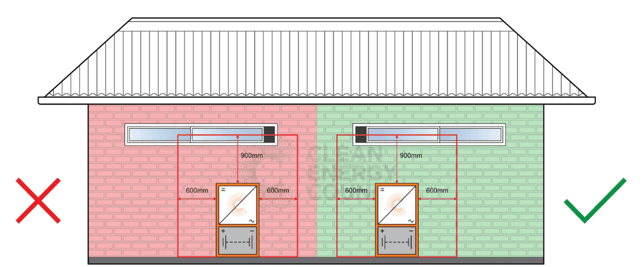
- Within 600 mm of an exit
- Within 600 mm of a window or ventilation opening connected to a habitable room
- Within 600 mm of an appliance
- Within 900 mm below any of the above
- Ceiling spaces
- Wall cavities
- Roofs (unless specifically designed for it)
- Under floors of habitable rooms
- Under stairways
- Under walkways
- Evacuation or escape routes
These restrictions are designed to ensure safe access and minimise potential hazards.
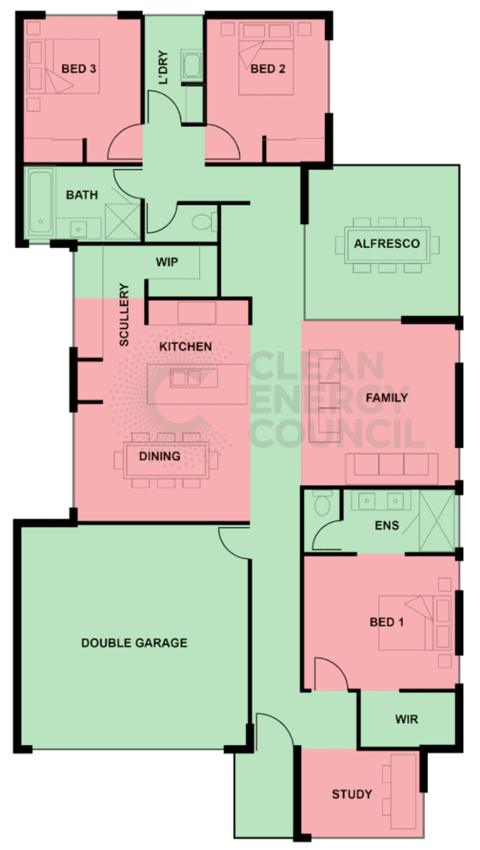
What Is Considered a Habitable Room?
The standards distinguish between habitable and non-habitable areas of a home.
Habitable Rooms
These are areas where people typically live or spend time, such as:
- Bedrooms
- Living rooms
- Kitchens
- Dining rooms
- Studies
Non-habitable Areas
These include spaces such as:
- Garages
- Storage rooms
- Utility rooms
- Laundries
Battery systems cannot be installed within 600 mm of windows or ventilation openings leading to habitable rooms, and they cannot be installed under floors of habitable spaces.
Outdoor Installation Considerations
When batteries are installed outside the home, the type of building construction can influence the requirements.
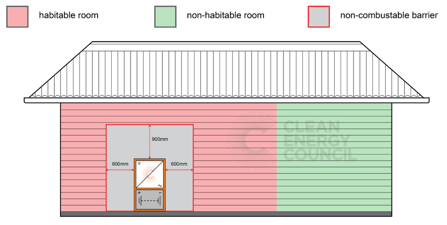
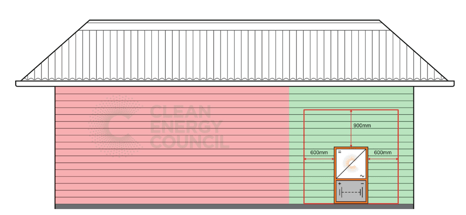
Weatherboard Homes
Weatherboard construction is considered combustible, so additional protective measures may be required.
If a battery is installed on an external wall that backs onto a habitable room, non-combustible material may be required behind the battery.
This protective area generally needs to extend:
- 600 mm on both sides of the battery
- 900 mm above the battery
Brick Homes
Brick construction is non-combustible, so placement restrictions are generally less strict.
However, there are still limitations around doors and windows connected to habitable rooms.
For example, batteries cannot be installed:
- Within 600 mm of the side of a window or door
- Within 900 mm above a window
- Directly under windows connected to habitable rooms
Planning a Solar Battery Installation
Every property is different, and battery placement needs to consider both safety regulations and the overall system design.
When planning a solar and battery system, the installation location is typically assessed based on:
- Compliance with Australian standards
- Available wall space
- Switchboard location
- Cable routes
- Environmental exposure
Our in-house installation team assesses these factors during the design and installation process and will walk you through the most suitable location for the system at your property.
← Back to all articles