
 Ciaram Granger

In this article, MyEnergy’s CEO draws on decades of experience designing and building remote area solar power systems across Australia. From isolated stations and farms to island resorts and remote communities, he breaks down what it really takes to deliver power that works every day, where the grid doesn’t reach.
Remote Area Solar Power Systems
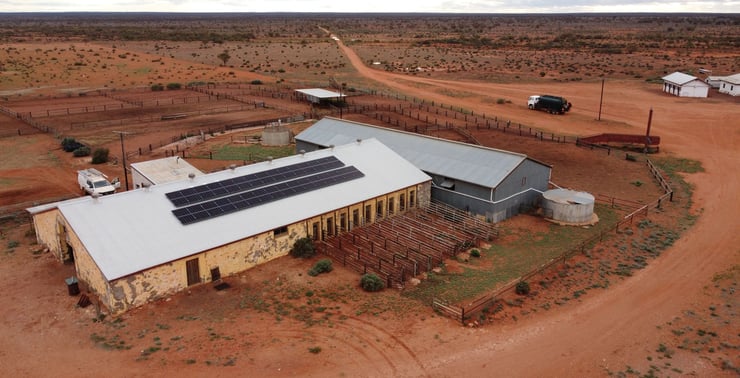
I’ve spent a good part of my working life designing and building power systems in places most people only ever see on a map. Stations hundreds of kilometres from the nearest town. Remote homes at the end of long tracks. Island resorts, roadhouses, farms and communities where the grid either doesn’t exist or can’t be relied on.
Remote area solar power in Australia is its own category. It’s not just “solar and battery without the grid”. It’s power that has to work every day, often with no margin for error.
Over the years, I’ve learned that the technology is only part of the equation. The real difference comes down to how the remote area power system is designed, how it’s installed and whether the people who built it are still around to support it years down the track.
How Remote Area Solar Systems Have Evolved
One of the biggest shifts I’ve seen over the last decade is how much more scalable and robust modern remote area solar power systems have become.
Early off-grid systems often had very fixed limits. Battery capacity was expensive and inflexible. Inverter capacity was hard to expand. Making changes later usually meant major rework or replacement of core equipment. If a system was undersized, you felt it every day.
Today, the landscape is very different.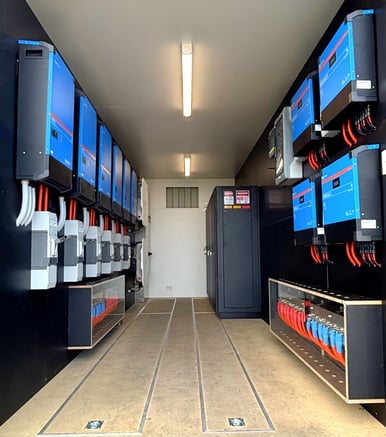
Modern battery systems can be expanded in stages as needs change. Inverter platforms allow additional capacity to be added without starting from scratch. AC and DC-coupled solar, better control systems and smarter monitoring mean the system can adapt rather than struggle.
This has changed how we design systems. Instead of trying to predict every future load on day one, we can build solid foundations that allow for growth, whether that’s additional buildings, more machinery, electric vehicles, or changes in how a site is used.
Just as importantly, systems are far more resilient than they used to be. Better battery management, improved fault handling and tighter integration with generators mean the system can ride through problems rather than falling over when conditions aren’t perfect.
That robustness matters in remote Australia, where recovery time is often measured in days, not minutes.
Australian Conditions are Unforgiving
Heat, dust, long cable runs, corrugations, lightning, insects, salt air, sometimes all at once. These things matter.
A system that looks fine on paper or works well in a suburban environment can struggle badly in remote Australia if it hasn’t been designed with these conditions in mind. We see it all the time when we’re called in to fix or rebuild systems that were undersized, poorly protected, or built with components that just aren’t suited to the environment.
Good remote area solar system design starts with acknowledging reality:
- Loads change over time
- Weather isn’t predictable
- Maintenance access can be limited
- Downtime can be very expensive

Designing for Australian conditions means allowing headroom. It means proper thermal management, conservative battery sizing, sensible generator integration, and equipment that’s proven in the field, not just on a spec sheet.
Design Matters More than Brand Names
People often ask what panels, batteries, or inverters they should buy. Those questions are understandable, but they’re usually the wrong place to start.
The same components can perform very differently depending on how they’re designed into a system. Cable sizing, protection, control logic, battery charge rates, generator settings and monitoring all play a role. Get those wrong and even good gear will disappoint.
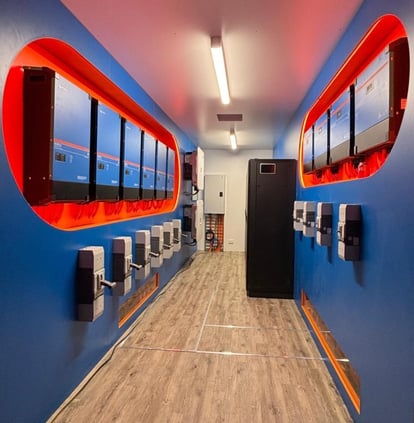 A proper design looks at how you actually live or work on site:
- When loads occur, not just how big they are
- Seasonal differences between summer and winter
- What happens after three cloudy days
- How the system behaves when something goes wrong
In remote areas, resilience matters more than chasing theoretical performance.
Build Quality Isn’t Optional
In remote locations, there’s no room for shortcuts. A loose termination, poor enclosure choice, or messy installation might not show up straight away, but it will show up eventually.
We build systems assuming they’ll be shaken, baked, rained on and left alone for long periods. That means solid mounting, proper labelling, clean wiring, sensible layouts, and components that can actually be serviced without pulling half the system apart.
A neat install isn’t about aesthetics. It’s about reliability and safety over the long term.
One of the Most Overlooked Things: Servicing
This is the part many people don’t think about until something goes wrong.
Remote area solar systems are not “set and forget”. Even the best systems need checking, updates and occasional troubleshooting. Batteries age. Settings need refinement. Generators need to be exercised properly. Monitoring needs to be understood, not ignored.
Before committing to a system, it’s worth asking:
- Who will service this system in five years?
- Do they understand the design, or will they be learning on the job?
- Can they access parts and provide support when you’re not close to a city?
Dealing with a company that handles the design, installation and ongoing support makes a big difference. When the same team is responsible end-to-end, problems get solved faster and excuses disappear.
You can read more about Off Grid Power System services here:
What I Tell Customers to Look For
When people ask me for advice, even if they don’t end up working with us, I usually suggest focusing on a few key things:
- A clear, site-specific design, not a generic package or cabinet.
- Honest conversations about limitations and worst-case scenarios
- Systems that are designed to grow, not be replaced
- Proven equipment with a track record in remote conditions
- A realistic plan for maintenance and long-term support
Remote power should reduce stress, not create it.
Final Thoughts
I still enjoy this work because every site is different. Every system tells a story about how people live, work and rely on power in places where reliability really matters.
The evolution of remote area power technology has made it easier to build systems that are flexible, robust and forgiving, but only if that technology is applied properly.
Good remote area solar power design isn’t about selling hardware. It’s about understanding risk, planning for reality and taking responsibility for the system long after it’s switched on.
If there’s one thing I’ve learned, it’s that the best systems are the ones you don’t have to think about, because they just keep doing their job, quietly and reliably, no matter how far from the grid you are.
Find out more about our remote area solar power solutions here:

Written by Ciaram Granger, CEO of MyEnergy Engineering.
Ciaram has spent more than a decade designing and delivering remote area power systems across Australia, from isolated stations and working farms to island resorts and off-grid homes. As CEO of MyEnergy Engineering, he remains closely involved in system design and long-term project oversight, with a focus on building power systems that are engineered for Australian conditions and supported for the long haul.
← Back to all articles